GLUTEAL FAT TRANSFER SURGERY IN MEXICO
Brazilian Butt Lift
in Mexico
Explore Gluteal Fat Transfer Options With a Focus on Surgical Safety
Connect with board-certified plastic surgeons adhering to international safety protocols. Make informed surgical decisions with verified physician credentials, accredited hospital standards, and comprehensive pre-operative virtual evaluations.
Surgeon Qualifications
Procedure-Specific Safety
Virtual Consultations

CLINICAL OVERVIEW
What Is a Brazilian Butt Lift (BBL)?
Medically termed autologous gluteal fat grafting, a Brazilian Butt Lift is a specialized surgical procedure designed to harvest a patient's own adipose tissue via targeted liposuction, isolate viable fat cells through clinical purification, and reinject them subcutaneously to enhance gluteal proportion and contour.
Critical Medical Clarification: A BBL is strictly a structural contouring procedure, not a weight-loss intervention or obesity treatment. Furthermore, modern clinical guidelines mandate strict subcutaneous-only grafting above the muscle fascia to mitigate the primary surgical risk of pulmonary fat embolism.
Fat Transfer
Autologous fat is gently extracted from localized donor reserves such as the abdomen, flanks, or lower back. The harvested tissue is processed through centrifugation to ensure only pure, viable fat cells are reintroduced.
Body Contouring
Rather than reducing overall body mass, the technique operates as a dual-phase silhouette refinement. Liposuction narrows the donor waistline to create dramatic anatomical contrast before enhancing gluteal balance.
Safety Evaluation
Modern anatomical protocols mandate that grafting occurs exclusively within the subcutaneous space above the gluteal muscle plane, eliminating deep intramuscular injection risks to prioritize patient hemodynamic safety.
TRANSPARENT SURGICAL PRICING
How Much Does a Brazilian
Butt Lift Cost?
Understanding procedural costs requires looking past standalone sticker prices. Total investment reflects surgeon qualification, certified hospital accreditation, specialized anesthesia care, and rigorous post-operative recovery monitoring.
Because clinical needs vary by liposuction donor volume, anatomical goals, and required hospital observation, quotes must be evaluated as an inclusive medical package rather than an isolated surgical fee.
BBL Cost in the United States
US surgical quotes often separate the surgeon's professional fee from facility and staffing costs, leading to unexpected out-of-pocket charges as recovery progresses.
- Itemized OR and facility hourly surcharges
- Separate anesthesiologist consultation billing
- High regional administrative overhead costs
- Post-op compression and supplies billed separately
- Additional fees for multi-area donor harvesting
BBL Cost in Mexico
Under Mexico's coordinated medical model, certified surgical centers consolidate clinical, surgical, and post-operative logistics into a predictable, transparent single quote.
- All-inclusive accredited surgical theater fees
- Dedicated board-certified anesthesiologist care
- Favorable exchange rate lowering clinical overhead
- Structured clinical observation stay included
- Dedicated bilingual surgical concierge support
What Should Your BBL Quote Include?
A clinical estimate must contain these 11 essential components to ensure safety and prevent hidden billing:
- Board-certified surgeon procedural fee
- Certified hospital operating facility fees
- Licensed anesthesiologist management
- Required pre-operative lab evaluations
- Cardiac EKG and surgical clearance checks
- Post-op medical compression garments
- Prescription surgical recovery medications
- Inpatient hospital overnight monitoring
- Scheduled clinical follow-up consultations
- Medical ground transportation transfers
- Complication coverage clinical protocol
Personalized quotes are provided following physician evaluation of medical records and goals.
INFORMED DECISION FRAMEWORK
Why Do Some Patients Explore
BBL Surgery in Mexico?
Prospective patients frequently evaluate cross-border plastic surgery options to balance affordability with specialized clinical expertise. Responsible medical travel requires transparent research into surgical training, accredited surgical centers, and realistic logistical planning before making any commitment.
Compare Participating Surgeons
Review board certification via CMCPER, assess documented procedural case experience, and confirm verified hospital admission privileges.
Understand Treatment Options
Examine ultrasound-guided subcutaneous grafting methods and customized surgical plans aligned strictly with patient anatomical safety limits.
Review Potential Costs
Analyze transparent pricing structures that detail facility accreditation, board-certified anesthesiology, garments, and clinical follow-up.
Plan a Virtual Consultation
Participate in clinical telehealth evaluations to review health histories, confirm surgical candidacy, and define mandatory recovery timelines.
Medical Advisory Notice: Lower pricing should never replace careful evaluation of surgical credentials, accredited hospital facilities, and comprehensive postoperative aftercare protocols. Your safety depends on meticulous qualification, not cost savings.
Strict verification standards applied: CMCPER certification & accredited hospital facilities required.
STEP-BY-STEP SURGICAL PROTOCOL
How Does Brazilian Butt Lift
Surgery Work?
A meticulous, four-phase clinical procedure designed to contour the body using your own natural tissue. Every phase is carried out under strict multi-society safety standards, using real-time subcutaneous ultrasound monitoring to ensure uncompromising patient safety.
Medical Evaluation & Ultrasound Mapping
Prior to surgery, your specialist conducts high-resolution anatomical mapping. Pre-operative ultrasound evaluates subcutaneous depth, gluteal muscular fascia position, and tissue vascularity to plan an individualized surgical trajectory.
Targeted Donor-Area Liposuction
Using gentle tumescent infiltration and micro-cannulas, excess fat is harvested from donor areas like the abdomen, flanks, or lower back. Gentle extraction technique protects fragile cell walls to ensure optimal graft viability.
Closed-System Fat Purification
Harvested lipoaspirate is processed within a sterile closed system. Filtration separates prime, intact adipocytes from free fatty acids, tumescent fluids, and cell debris, yielding a purified, concentrated graft matrix ready for transfer.
Ultrasound-Guided Subcutaneous Transfer
Fat is micro-injected strictly into the subcutaneous tissue plane under real-time ultrasound guidance. Continuous visualization prevents intramuscular penetration, safeguarding deep gluteal veins and ensuring controlled, symmetrical contours.
Board-Certified Plastic Surgeons • Real-Time Ultrasound Guidance • Strict Subcutaneous Injection Protocol
VERIFIED PHYSICIAN NETWORK
Explore BBL Surgeons in Mexico
Every specialist in our network holds active board certification by the Mexican Council of Plastic, Aesthetic, and Reconstructive Surgery (CMCPER) and operates exclusively within internationally accredited surgical hospitals.
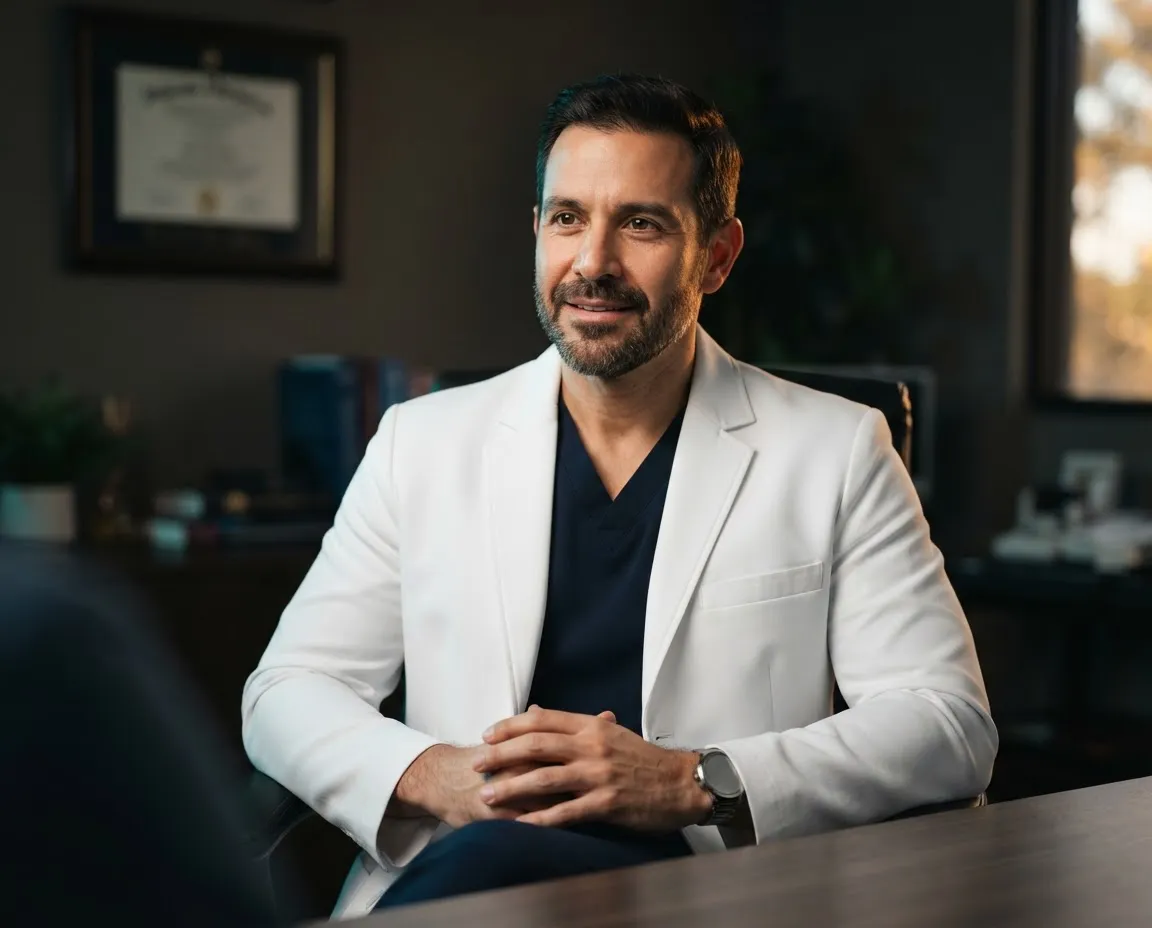
CMCPER #1842 · GUADALAJARA
Dr. Alejandro Morales
16+ years specializing in anatomical body contouring and high-definition lipo-sculpture with over 2,200 documented procedures.
- Active CMCPER & AMCPER Member
- ISAPS Certified International Specialist
- Surgical Privileges: Puerta de Hierro Hospital
- Ultrasound-Guided Subcutaneous Protocol

CMCPER #2105 · TIJUANA / SAN DIEGO
Dr. Sofia Cárdenas
14+ years dedicated to natural gluteal reshaping and ultrasound-guided fat grafting with dual fellowship training in Mexico and Spain.
- Active CMCPER Specialist Credential
- ASPS International Affiliate Member
- Surgical Privileges: Blue Medical Tower
- Safety Board Strict Cannula Certification

CMCPER #1793 · CANCUN / RIVIERA
Dr. Roberto Villaseñor
18+ years leading surgical safety protocols with specialized international credentials in post-bariatric and aesthetic lipofilling.
- Active CMCPER Senior Specialist
- FILACP Ibero-Latin American Fellow
- Surgical Privileges: Galenia JCI Hospital
- Real-Time Deep Vessel Ultrasound Monitor
100% of network surgeons are independently verified against the Mexican Federal Medical Registry.
IMPORTANT PATIENT SAFETY INFORMATION
Understanding Brazilian Butt
Lift Safety
Patient safety in gluteal augmentation has advanced drastically over the past decade. Historically, unstandardized surgical techniques carried serious systemic risks, primarily pulmonary fat embolism (PFE), which occurs when fat enters deep venous structures under the gluteal muscle.
Today, leading surgical societies enforce rigorous subcutaneous-only grafting guidelines. By adopting real-time anatomical ultrasound, board-certified surgeons ensure fat placement remains strictly above the muscle layer, minimizing vascular risks and safeguarding long-term outcomes.
BBL surgery is not risk-free. Modern clinical protocols strictly prohibit intramuscular injections to eliminate deep vascular trauma. Always verify clinical credentials before scheduling.
Verify Surgeon Qualifications
Only work with board-certified plastic surgeons credentialed by recognized national boards (CMCPER in Mexico). Confirm documented specialization in gluteal fat transfer techniques.
Ask About Ultrasound Guidance
Real-time intraoperative ultrasound enables visual cannula tracking throughout grafting, confirming precise needle placement and ensuring fat never enters muscular tissue planes.
Understand Injection Depth
Modern standards mandate grafting fat solely into the subcutaneous space (directly beneath the skin). Injections into or beneath the gluteal muscle are strictly prohibited worldwide.
Review Facility & Emergency Protocols
Procedures must occur in accredited, full-service hospitals equipped with licensed cardiac monitoring, intensive care units, and board-certified anesthesiologists on site at all times.
PATIENT VETTING CHECKLIST
Questions to Ask Your
Surgeon
Your consultation is your critical opportunity to inspect technical protocols and verify anatomical safety. A qualified plastic surgeon will welcome these detailed inquiries regarding surgical technique, operating room accreditation, and emergency contingencies. Use this guide to ensure your care strictly adheres to international standards.
Pre-Screened Standard: All partner physicians in our network are rigorously pre-screened to ensure active CMCPER board certification and exclusive ultrasound-guided subcutaneous grafting.
Direct vetting consultation with credentialed medical specialists.
10 Key Medical Evaluation Questions
Are you certified by CMCPER and an active member of AMCPER or ISAPS?
Do you use real-time intraoperative ultrasound guidance during fat injection?
Do you strictly place fat in the subcutaneous plane only, never in the deep muscle?
How many Brazilian Butt Lift surgeries have you performed in the past 12 months?
Is the operating surgical facility accredited by CSG or international bodies like AAAASF?
Will a dedicated, board-certified anesthesiologist monitor me throughout surgery?
What emergency life-support equipment and hospital transfer protocols are active?
What specific DVT and venous thromboembolism prevention protocols do you administer?
Do you limit daily surgeries to ensure optimal surgical precision without fatigue?
What post-operative checks and milestone evaluations are included during recovery in Mexico?
CLINICAL PROCEDURE COMPARISON
Brazilian Butt Lift vs.
Buttock Implants
Understanding the clinical differences between autologous fat grafting and prosthetic silicone implants is critical for selecting the surgical path best aligned with your anatomy, donor tissue availability, and aesthetic objectives.
Brazilian Butt Lift (BBL)
A two-stage body contouring surgery combining targeted liposuction (abdomen, flanks, or thighs) with specialized subcutaneous reinjection of purified autologous fat into the gluteal region.
- Augmentation Medium: 100% natural autologous living fat cells harvested via liposuction.
- Candidacy Criterion: Requires adequate subcutaneous donor fat reserves (minimum BMI threshold).
- Contouring Effect: Dual benefit: slims donor zones (waist/abdomen) while enhancing hip and gluteal projection.
- Tactile Quality: Completely natural anatomical softness and mobility with zero synthetic materials.
- Graft Integration: Approximately 60%–80% of transferred cells establish permanent blood supply; surviving tissue behaves like natural fat.
- Sitting Protocol: Strict avoidance of direct gluteal pressure for 6–8 weeks using a specialized BBL pillow.
Buttock Implants (Gluteoplasty)
A surgical placement of semi-solid, cohesive silicone elastomer prostheses placed intramusculary (within the gluteus maximus) through an incision concealed in the intergluteal crease.
- Augmentation Medium: Pre-formed, high-density cohesive silicone elastomeric prosthetic devices.
- Candidacy Criterion: Ideal for lean patients with insufficient donor adipose tissue for liposuction.
- Contouring Effect: Focused strictly on posterior projection; does not contour surrounding waistline or hips.
- Tactile Quality: Firmer, more structured feel compared to natural tissue, positioned deep within the muscle.
- Volume Predictability: 100% volume retention immediately predictable at placement; implants may require long-term monitoring or exchange.
- Sitting Protocol: Gradual reintroduction to sitting over 2–3 weeks, focusing on incision tension management.
CLINICAL ADVISORY NOTE
Neither procedure is universally appropriate for every individual. A patient possessing low body fat reserves may not qualify for a Brazilian Butt Lift due to insufficient donor graft material, making implants the viable technical alternative. Conversely, patients seeking simultaneous circumferential waist contouring and natural tissue integration frequently favor autologous fat transfer. A comprehensive clinical consultation and board-certified surgeon evaluation are essential to determine anatomical candidacy and prioritize safety.
PATIENT QUALIFICATION STANDARDS
Who May Be a Candidate?
Surgical safety always takes precedence over aesthetic desire. A Brazilian Butt Lift is a complex body-contouring procedure requiring thorough clinical evaluation, stable health, and adequate physiological reserves before surgical clearance.
Clinical Protocol Notice: Every international patient undergoes comprehensive lab panels, cardiovascular evaluation, and virtual examination by accredited board-certified surgeons in Mexico before travel is scheduled.
Preliminary virtual review: No obligation medical pre-screening
Overall Health
Candidates must maintain a stable BMI typically under 30-32, have non-smoking status for at least 6 weeks pre- and post-op, and have no uncontrolled systemic conditions like hypertension, diabetes, or coagulopathies.
- BMI within safe surgical threshold
- Strict tobacco and nicotine-free clearance
- Clean cardiovascular and hematology panel
Available Donor Fat
Because fat grafting requires autologous tissue harvest, patients must possess sufficient harvestable subcutaneous deposits in donor sites such as the abdomen, flanks, back, or thighs to achieve desired volume contouring.
- Adequate harvest zones (abdomen, flanks, thighs)
- Viable subcutaneous tissue density
- Sufficient volume for processing & purification
Individual Anatomy
Skin laxity, underlying musculoskeletal structure, and natural gluteal architecture define feasible projection. Firm skin with good elasticity adapts far better to expansion and contouring than severely stretched tissue.
- Sufficient skin tone and elasticity
- Favorable hip-to-waist musculoskeletal frame
- Absence of severe prior scarring in donor zones
Realistic Expectations
Fat transfer results in approximately 60-75% graft retention over 6 months. Ideal patients appreciate natural proportion over extreme exaggeration and commit fully to post-op zero-pressure sitting rules.
- Understanding of biological fat reabsorption rates
- Commitment to 3-4 weeks zero direct pressure
- Goal of harmonious body balance and contour
POSTOPERATIVE CLINICAL REALITY
What Is Recovery Like?
Protecting transferred fat cells requires strict adherence to positional guidelines, medical compression schedules, and managed mobility. Healing is an active process with rigorous phases designed to safeguard your surgical outcome and safety.
PHASE 1: DAYS 1 TO 7
Initial Healing & Early Mobilization
The first 72 hours demand monitored rest alongside light ambulation. Patients manage acute fluid retention, localized bruising, and surgical drainage while initiating early circulation routines to prevent blood clots.
- Gentle assisted walking begins within 4 to 6 hours post-op to promote systemic venous flow
- Continuous surgical garment coverage with daily drainage assessment and incision checks
- Prescribed anti-inflammatory and analgesic regimens administered on a strict clinical timetable

PHASE 2: WEEKS 1 TO 8
Positioning Protocols: Sitting & Sleeping
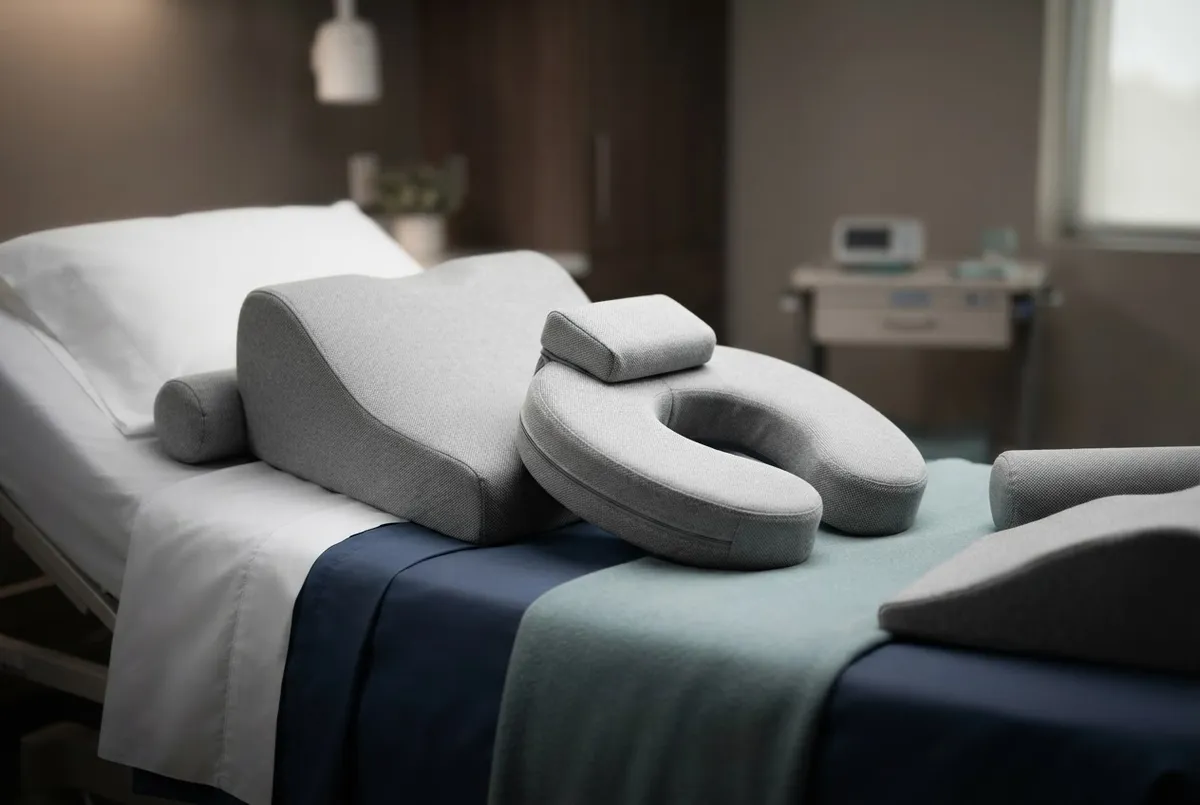
Newly grafted fat cells rely on delicate neovascularization (new blood supply) during the first two months. Any direct sustained pressure compresses capillary beds, depriving cells of oxygen and compromising overall graft retention.
- Sleep strictly in a prone (stomach) or supported lateral (side) position using wedge bolsters
- Total sitting prohibition for the first 14 days, except for brief toilet use
- Mandatory use of a certified BBL pillow placed under the posterior thighs when sitting resumes at Week 3
PHASE 3: WEEKS 2 TO 6
Donor-Area Care & Compression Garments
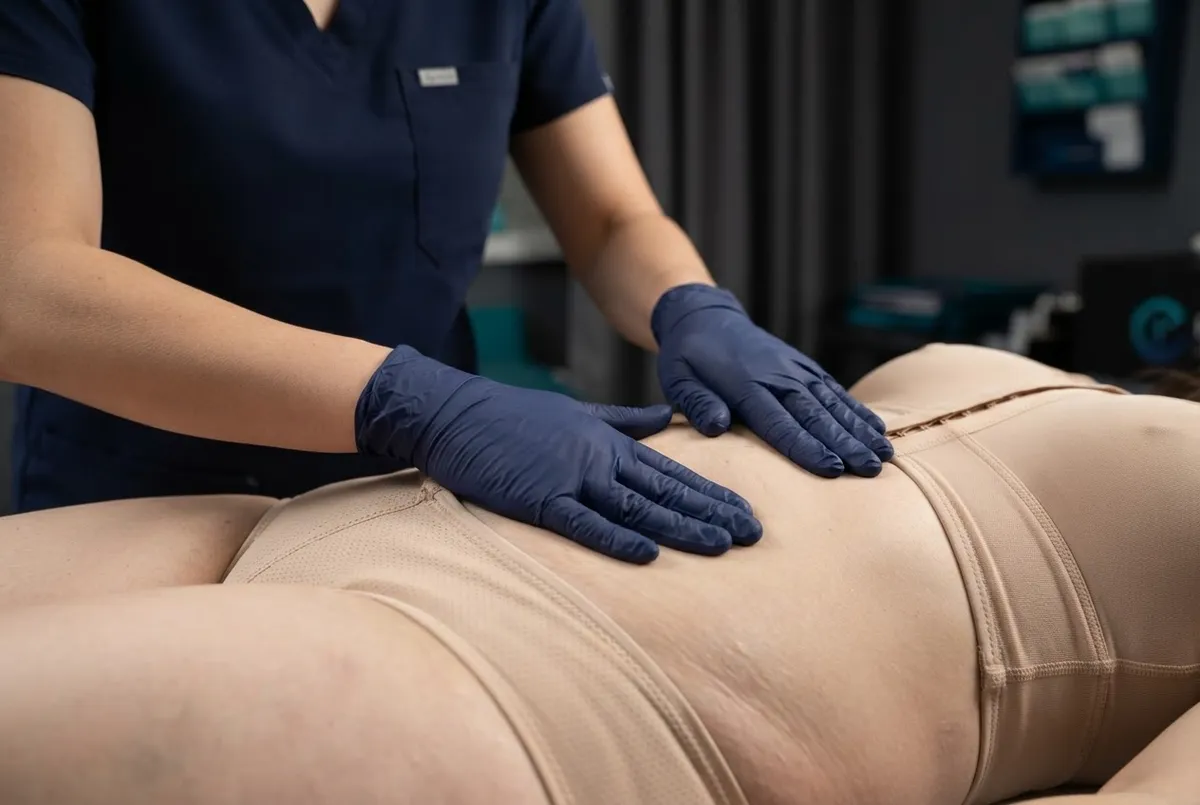
While transferred fat zones require zero pressure, liposuction donor areas (abdomen, flanks, and back) need disciplined compression to prevent seromas, support skin retraction, and accelerate tissue adherence.
- Medical-grade Stage 1 faja worn 23 hours daily, transitioning to Stage 2 sizing as edema clears
- Manual lymphatic drainage massages performed by certified clinicians to eliminate interstitial fluid
- Foam boards and lumbar shields fitted precisely to prevent abdominal creasing and skin irregularities
PHASE 4: DISCHARGE & BEYOND
Follow-Up Care & Discharge Safety
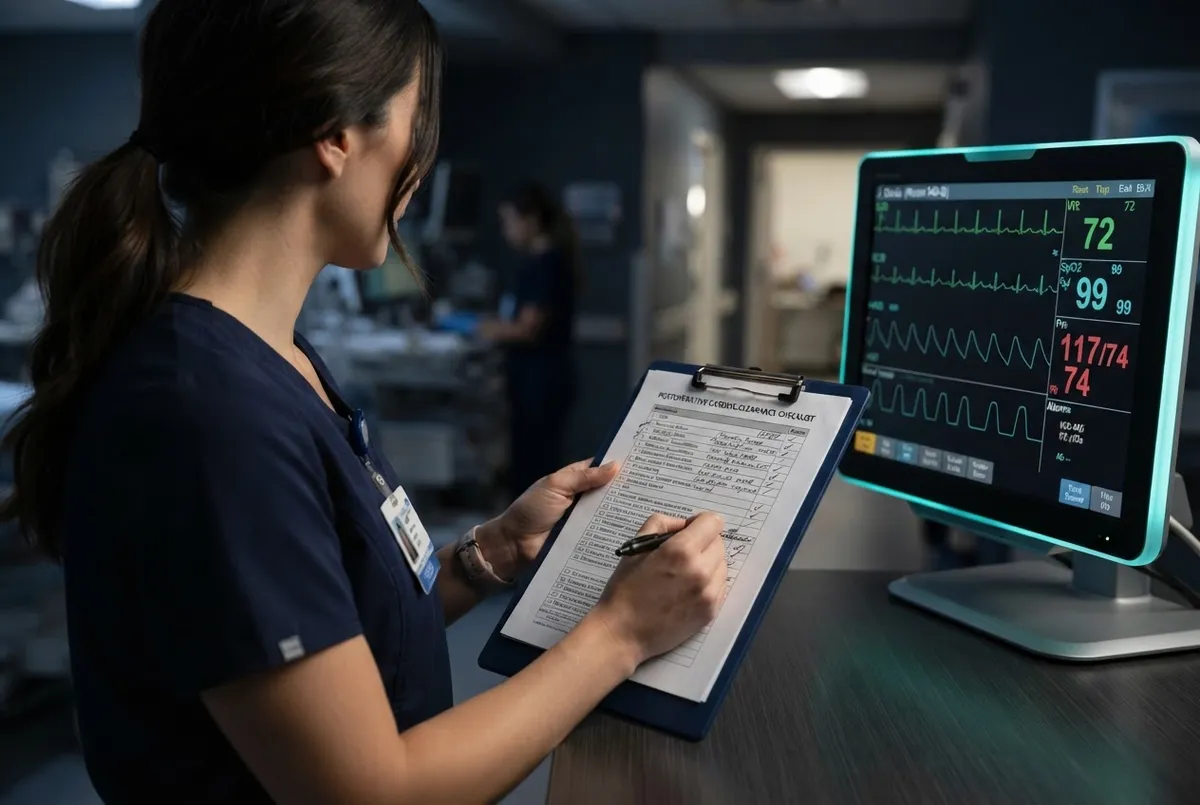
Safe return travel depends on clear objective health milestones rather than arbitrary dates. Continuous clinical monitoring ensures immediate identification of any healing irregularities before and after your flight home.
- Required in-person surgical follow-up assessments on Day 1, Day 3, and Day 7 prior to departure
- Comprehensive fit-to-fly clearance evaluation checking hemoglobin levels and deep vein thrombosis safety
- Structured remote telehealth check-ins at 2 weeks, 6 weeks, 3 months, and 6 months post-discharge
Clinical Advisory on Patient Recovery Variation
Healing velocity, swelling duration, and final fat retention percentages depend on unique patient physiology, tissue elasticity, metabolic profile, and strict protocol compliance. Never deviate from sleeping restrictions, compression wear schedules, or sitting limitations without direct authorization from your attending board-certified surgical team.
MANDATORY CLINICAL DISCLOSURE
What Are the Risks?
Gluteal fat grafting is among the most technically complex procedures in cosmetic surgery. Medically responsible transparency requires stating plainly that Brazilian Butt Lift surgery involves severe, potentially life-threatening risks that must never be minimized.
The paramount danger is Pulmonary Fat Embolism (PFE). When harvesting cannulas inadvertently breach deep muscular planes, fat particles can enter ruptured deep veins and travel directly to the lungs and heart, causing acute cardiopulmonary arrest.
Substantial surgical bleeding, massive fluid shifts from multi-area liposuction, and deep venous thrombosis (DVT) demand rigorous safety standards. We mandate accredited hospital operating rooms, board-certified plastic surgeons, and strict subcutaneous-only protocols to protect human life.
Fat Embolism Risk & Intramuscular Injection
Fat injected deep into gluteal musculature can lacerate the superior or inferior gluteal veins. When macroscopic fat enters venous circulation, it creates an acute pulmonary occlusion with high historical mortality rates. Mitigating this risk requires strict subcutaneous-only grafting, rigid cannulas greater than 4mm, and continuous ultrasound verification.
Surgical Hemorrhage & Anesthesia Risks
Comprehensive multi-zone liposuction creates massive intravascular fluid shifts and blood loss. Excessive fat harvesting in a single session significantly raises the risk of hypovolemic shock, cardiac strain, and prolonged anesthesia toxicity. Accredited facilities limit harvest volumes and maintain dedicated blood transfusion reserves.
Postoperative Monitoring & Tissue Necrosis
Overfilling buttocks tissue beyond physiological capillary capacity starves grafted cells of oxygen, causing fat necrosis, oil cysts, or deep infections. Extended inpatient monitoring for at least 24-48 hours ensures timely detection of microvascular compromise, seromas, or deep vein clots before discharge.
Direct medical consultations with certified plastic surgeons. Independent clinical safety review.
SURGICAL TRAVEL & LOGISTICS
Planning Your BBL Surgery
Trip to Mexico
Long-distance travel immediately prior to or following extensive body contouring requires precise clinical oversight. Post-surgical immobility combined with cabin pressure changes heightens deep vein thrombosis (DVT) and pulmonary embolism risks. Certified protocols mandate a structured itinerary with mandatory in-country recovery intervals before any commercial flight clearance is granted.
Travel Planning
Book direct, non-stop flights whenever feasible. Plan a minimum stay of 10 to 14 days in Mexico to allow surgical swelling to stabilize and safely pass high-risk thromboembolic windows before airport boarding.
- Mandatory 10-14 day in-country stay
- Direct routing to avoid connection stress
- Fit-to-fly medical documentation
Accommodation Options
Standard tourist hotels lack essential post-op adaptations. We partner with licensed surgical recovery retreats and specialized partner suites featuring zero-pressure incline beds and sanitation standards.
- Zero-pressure bariatric prone mattresses
- Nutritional recovery meal preparation
- Wheelchair and flat-bed transfers
Postoperative Support
Direct assistance during the initial 72 hours is critical. Dedicated bilingual medical aides monitor vital signs, assist with supervised walking regimens to encourage venous return, and supervise hydration.
- 24/7 bilingual bedside nursing care
- Assisted ambulation every 2 hours
- Garment & drain monitoring protocols
Follow-Up Care
Comprehensive healing requires mandatory post-op clinical milestones. You must complete at least two physical examinations with your surgeon and receive documented travel clearance before heading home.
- 2-3 in-person surgical clearance checks
- Licensed lymphatic massage coordination
- Remote telemedicine continuity at home
Medical Advisory & Travel Clearance Notice
Disclaimer: Flying too soon after fat transfer surgery presents serious circulatory hazards, including deep vein thrombosis (DVT) and pulmonary embolism. You must never arrange return travel without receiving formal, documented written discharge from your board-certified surgeon in Mexico. Compression garments must be worn as directed during all transits, and hydration and ambulation protocols must be strictly followed.
FACILITATION ROADMAP
How Does Brazilian Butt Lift
Surgery Work?
Understanding your procedure begins with a transparent, structured pathway. Mexico Surgery Connect guides every phase of your journey: connecting you with vetted, board-certified surgical specialists in accredited medical centers across Mexico.
Medical Disclosure: Mexico Surgery Connect is an independent medical facilitator connecting international patients with accredited plastic surgeons. Clinical candidacy, surgical plans, and medical evaluations are performed solely by licensed physicians.
01
STAGE 1 • RESEARCH
Surgeon & Facility Verification
Explore vetted board-certified plastic surgeons (CMCPER) and CSG-accredited hospital facilities. Compare surgeon safety metrics, verified clinical outcomes, and past gluteal contouring results.
02
STAGE 2 • CHAT
Bilingual Case Coordination
Connect securely with experienced bilingual care specialists. Review medical history, discuss donor-site fat feasibility, and receive itemized, transparent pricing without hidden clinic fees.
03
STAGE 3 • SCHEDULE
Itinerary & Hospital Booking
Reserve your surgical date at a premier accredited surgical center. Your concierge finalizes hospital admission, secure airport transportation, and verified recovery resort arrangements.
04
STAGE 4 • DISCUSS
In-Person Surgical Planning
Participate in thorough pre-op evaluations with your primary surgeon. Finalize subcutaneous fat graft distribution, ultrasound-guided safety protocols, and personalized contouring goals.
Free Confidential Coordinator Consultation • No Obligations • Verified Accredited Hospitals Only
SURGICAL TRANSPARENCY & CLARITY
Frequently Asked Questions
Every surgical journey requires complete confidence. Review rigorous medical protocols, real-time ultrasound monitoring standards, and logistical safeguards before scheduling your comprehensive assessment.
Board-Certified Plastic Surgeons • Private Hospital Accreditations
What exactly is a Brazilian Butt Lift (BBL)?
A Brazilian Butt Lift is a specialized autologous fat transfer procedure. Your surgeon uses gentle tumescent liposuction to harvest viable donor fat from designated areas such as the abdomen, flanks, or thighs. The harvested adipose tissue is sterilely purified, separated, and systematically reinjected into the gluteal region to enhance volume, projection, and overall silhouette proportion without artificial foreign implants.
What is the total cost of BBL surgery in Mexico compared to the US?
Complete surgical packages in accredited Mexican hospitals typically range from $4,200 to $6,500, representing a 60% to 70% savings compared to United States pricing ($12,000 to $20,000+). Our transparent packages bundle board-certified surgeon fees, accredited surgical facility operating time, board-certified anesthesiologist fees, pre-operative lab work, post-op compression garments, and initial recovery medications.
Is a BBL dangerous, and how are modern surgical risks minimized?
Historically, high-risk outcomes were linked to deep intramuscular injections where fat could enter large gluteal veins. Today, certified surgical guidelines mandate that fat must be injected exclusively into the superficial subcutaneous layer. By employing mandatory real-time ultrasound guidance, blunt-tipped cannulas, and stringent operating theater protocols, the safety margin has improved dramatically.
What is real-time ultrasound guidance during BBL surgery?
Real-time ultrasound guidance utilizes an intraoperative imaging probe during the grafting stage. The surgical team continuously visualizes cannula depth and anatomical tissue planes on a high-resolution display. This ensures that every droplet of fat is placed strictly within the safe subcutaneous plane above the gluteal fascia, eliminating accidental muscle penetration.
Where is the harvested fat safely injected during the procedure?
In strict compliance with international plastic surgery consensus guidelines, fat is injected exclusively into the subcutaneous fat pocket between the dermis and the gluteus maximus fascia. Injection into or beneath the deep gluteal musculature is strictly prohibited in our partner surgical centers to ensure patient vascular safety.
Who is an ideal candidate for a Brazilian Butt Lift?
Ideal candidates are non-smokers in good overall health with a stable BMI typically between 22 and 30, possessing adequate subcutaneous donor fat deposits in the abdomen, flanks, or back. Patients must have realistic aesthetic goals, demonstrate healthy skin elasticity, and be medically cleared through comprehensive pre-operative blood panels and cardiovascular assessments.
What does the post-operative recovery timeline look like?
Initial downtime requires resting without direct gluteal pressure for a minimum of 2 to 3 weeks using a specialized BBL pillow. Patients typically return to sedentary remote work after 10 to 14 days and light cardio at 4 to 6 weeks. Medical travel logistics require remaining in Mexico for 7 to 10 days post-surgery for scheduled drain monitoring, suture evaluations, and final fit-to-fly clearance.
How much transferred fat survives permanently?
On average, 60% to 80% of successfully grafted fat cells establish microvascular blood supply and integrate permanently into the recipient tissue bed. Initial swelling subsides across 8 to 12 weeks, with permanent contour stabilization established at roughly 6 months. Maintained results require stable body weight and strict compliance with post-operative compression guidelines.
Can a BBL be safely combined with other surgical procedures?
Yes, common combinations include 360-degree liposuction with skin tightening or cosmetic breast augmentation. However, patient safety limits total surgical anesthesia time to 5 to 6 hours and restricts total fat aspiration volume to standard clinical thresholds. Combined procedures are evaluated strictly on individual hemodynamic stability and donor health.
Are financing and flexible payment options available for international patients?
Yes, international patients can utilize specialized medical financing providers such as United Medical Credit, Medicard, and Citerra Finance, which offer structured payment terms up to 60 months. We also accept direct wire transfers and major credit cards, accompanied by itemized documentation for HSA/FSA health reimbursement verification where eligible.
How do you verify and choose a board-certified plastic surgeon in Mexico?
All participating specialists hold active certification from CMCPER (Consejo Mexicano de Cirugía Plástica, Estética y Reconstructiva) and international credentials with ISAPS or ASPS. We verify hospital admitting privileges at CSG-accredited (Consejo de Salubridad General) or Joint Commission International equivalent private medical facilities.
How do pre-operative virtual surgical consultations work?
Your virtual consultation takes place via secure HIPAA-compliant telehealth video. You meet directly with your selected board-certified surgeon to review medical history, evaluate standard anatomical photographs, discuss target contour goals, and confirm your preliminary surgical plan, donor fat availability, and candidate eligibility prior to booking travel.
What hospital accreditations and emergency safety standards are required?
Surgeries are conducted exclusively within full-service tertiary-level private hospitals equipped with dedicated intensive care units (ICUs), 24/7 on-site emergency medicine physicians, accredited blood banks, and advanced HEPA-filtered positive-pressure surgical suites. Independent outpatient clinics are never utilized for BBL procedures.
What are the first steps to schedule a consultation and begin the process?
Beginning the process is simple: submit a confidential assessment request through our portal. A dedicated bilingual medical concierge will contact you within 24 hours to gather baseline health data, assist with medical photo guidelines, schedule your direct video consultation with a certified plastic surgeon, and coordinate all flight and recovery logistics.
PATIENT CONCIERGE & ADVISORY
Considering Brazilian Butt Lift
Surgery in Mexico?
Take the first step toward safe, board-certified care. Connect one-on-one with a dedicated patient concierge who will answer your surgical questions, walk you through credentialed specialist profiles, and provide a comprehensive, transparent treatment breakdown with zero obligation.
100% Confidential Consultation • Board-Certified Specialists • Transparent Fixed Pricing

Connecting patients with verified, certified cosmetic surgeons and accredited medical facilities across Mexico. Explore your options with guidance from our 24/7 AI-powered concierge.
PATIENT CONCIERGE
Available 24/7 through our virtual assistant.
Trust & Policies
IMPORTANT MEDICAL INFORMATION
SurgiStack is an independent patient coordination platform, not a hospital, clinic, or healthcare provider. Medical consultations, evaluations, treatment recommendations, and surgical procedures are provided by independent healthcare professionals. SurgiStack does not diagnose medical conditions, determine surgical eligibility, or guarantee treatment outcomes. Patients should independently verify physician credentials and facility accreditations and discuss surgical risks with their treating physician. Travel coordination is available through select participating surgeons. Our 24/7 AI concierge provides non-medical assistance and is not an emergency service.


© 2026 SurgiStack. All rights reserved.